
When news broke yesterday (July 15th, ’25) that Dan Rivera, one of the caretakers touring the infamous “Annabelle” doll, had died unexpectedly, it didn’t take long for the usual whispers to start. Was it the curse? Did he anger the doll? Had he “disrespected the spirit”? You could practically hear the content wheels turning. There’s a particular kind of internet buzz that surrounds this kind of tragedy. Not just the usual shock and mourning, but something else. Something hungry. When someone associated with a haunted object or location dies, the mythology grows teeth… and fast. And here’s the thing that’s hard to say out loud without sounding cold: Dan Rivera didn’t die because of a haunted doll, but the story will say he did. That says more about us than it does about Annabelle. The Myth Always Wants More The Annabelle doll is a Raggedy Ann doll said to be…
Do you want Search?

Random Post
Search

Search
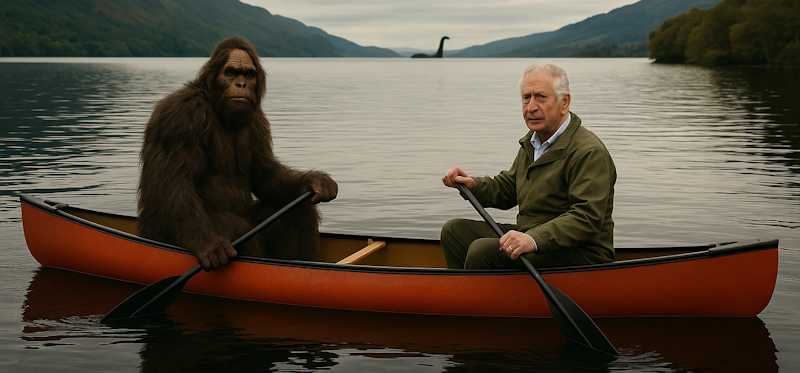
Can We Still Trust Paranormal Evidence in the Age of AI?
When someone says they’ve seen a ghost or encountered Bigfoot, the response from most people is almost automatic: “Pics or it didn’t happen.” In an age where nearly everyone has a camera in their pocket, the assumption is that if something truly extraordinary occurred, there should be some visual evidence to prove it. But even if someone did pull out their phone and show you a crystal-clear photo of a strange figure in the trees – would you believe them? Probably not. And that’s the crux of the issue. The demand for proof has always something of a ritual in discussions about the paranormal. Skeptics often ask for photos, video, or physical evidence to support extraordinary claims. But here’s the problem: photos and videos can lie. People have been faking paranormal media for as long as they’ve been able to create it – from Victorian-era spirit photography to the playful…

The Spooky Science of Jeremy Renner’s Brush With Death
Jeremy Renner’s My Next Breath is a fascinating and often moving memoir, and also a striking example of how humans build stories to survive the chaos of life. In the book, Renner recounts the shocking details of his near-fatal 2023 snowplow accident, from the crushing physical damage to the harrowing months of recovery. I had to put the book down and take a breather while reading through the descriptions of what he went through. These passages are visceral and raw: the agony of shattered bones, being fully conscious while being crushed, the uncertainty of whether he’d ever walk again, the shock of waking into a new, unfamiliar body. They’re difficult to read, but important for understanding what comes next. Layered into these raw accounts is an at-times polished narrative that occasionally leans more into motivational messaging than messy, human truth. Again and again, Renner frames his recovery as proof that…

It’s My Birthday. It’s Also Friday the 13th. Should I Be Worried?
It’s my birthday today, which would be entirely unremarkable – except that it falls on Friday the 13th. Cue the ominous music! As someone who investigates paranormal claims and writes critically about spooky beliefs, I’ve developed a soft spot for dates like this. Not because I believe in cosmic misfortune, but because these moments act as cultural Rorschach tests: they reveal how people interpret coincidence, risk, and fear. Friday the 13th isn’t just a date – it’s a (broken) mirror reflecting our psychology back at us. We worry about what feels risky, not what is risky Superstitions are more than just silly folklore – they influence how we behave and what we fear. And often, what we fear most has very little to do with reality. Take flying, for example. It’s one of the safest forms of transport available. In Great Britain, there were 5 road fatalities per billion vehicle‑miles…

Should We Have Seen The Telepathy Tapes Coming?
The concept of telepathy has long captivated human imagination and is a subject of cultural fascination. Imagine if humans could communicate through the power of our minds alone! We don’t have to imagine too hard thanks to telepathic characters in popular media ranging from the Marvel Universe to Anne Rice’s vampires and beyond. Another such media phenomenon, The Telepathy Tapes, has recently brought telepathy into the spotlight in ways that some may not have encountered before. The claim is that nonverbal autistic children possess mind-reading abilities which can be utilised through the proper methodologies. Although I research paranormal claims, the reason I am writing about The Telepathy Tapes here is because I’m autistic. The assertions promoted on this podcast cause me great concern about unscientific claims being promoted uncritically in a way which contributes to stigma and misunderstanding about autistic people and our lived experiences. Not only this, but there…

The Worst Ghosts of 2024!
It’s that time of the year once again where I present to you, the unsuspecting public, the 5 worst ghosts caught on camera which made headlines during the past year. Fear not. These apparitions are not labelled as the ‘worst’ because they’re fearsome, terrifying, and probably going to eat your soul. No, they’re labelled the worst because they’re a bit naff and (spoiler alert) probably not ghosts at all. For those not in the know – I’m a paranormal researcher using scientific scepticism to solve spooky mysteries. I don’t believe in ghosts but I’m fascinated by paranormal encounters and have been investigating them for over 20 years. I’ve been writing a ‘Worst Ghosts’ summary at the end of each year for over a decade and so, without further ado, may I present to you the worst ghosts on 2024! Please note: click any of the photos below to open the…

Skeptics on the Spectrum
Earlier this year, I was diagnosed as autistic. Shortly after my diagnosis results came through, I travelled to Manchester to attend QEDcon where I would be seeing many friends for the first time in years. It seemed that this QEDcon was the first one that many people were attending after taking a break due to the COVID-19 pandemic. Talking to people throughout the weekend at the conference, it became clear that many people have been through the ASD diagnosis process, were going through it, or were in a place from which they are considering going down the route of diagnosis. That weekend at QEDcon was the first time that I felt as though I properly came to terms with my diagnosis and with also myself. Diagnosies at 37 meant having to really examine my life up to that point. I travelled back to Wiltshire from Manchester feeling weirdly relieved and,…

ASSAP Has Gone to the (Misogynistic) Dogs
Today, it has come to light that Claire Davy, the ex-secretary of the Association for Scientific Study of Anomalous Phenomena stood down against her own wishes. Davy was the 10th trustee (of 13) to leave since June 2024. Only 3 remain: Steve Parsons, Norie Miles, and Bill Eyre. Screenshots have been shared of an email sent from the Founder and Vice President of ASSAP, Hugh Pincott, about his plan for handling Claire Davy and another female ex-trustee, Dr Becky Smith. Pincott’s plan is so deeply misogynistic that I honestly thought it was satire to begin with, but it is genuine. I’ve included below the email in full, followed by my thoughts. ‘And now, something even more revolutionary, which some may not agree with – psychological ju-jitsu! It is agreed that Claire is devious and poisonous, and we must respond with equal cunning. We can probably never defeat her with traditional…
Loremen Live! Ghosts of the Road
I stepped into the role of Deputy Loreperson when The Loremen were LIVE at the QEDcon in Manchester! In this episode, we meet roadside ghosts and road-adjacent spectres from across the UK (and beyond). Have you ever picked up a hitchhiker? No, neither have we. And these modern legends might make you feel a bit better about it…

All The Terrible Things
I was recently interviewed by stand up comedian, Jane Postlethwaite, for her Paranormal Queer Comedy podcast All The Terrible Things. I think it was hands down one of the most enjoyable podcast interviews I’ve ever done and this evident in the fact that we spoke for so long that the interview was released across two episodes! Listen to Episode 1: Listen to Episode 2: Jane has a open-minded, genuine curiosity about all things spooky and that shines through in the episodes where she chats about the paranormal with a range of guests. Previous episodes of the podcast include interviews with Ken Summers, as well as Darren Mann from the Paranormal Database. You can find the podcast and subscribe for future episodes it the many places you get your podcasts from! Jane and I discussed a whole range of things including skepticism, paranormal media, interesting cases, psychic mediums, ghost hunting…